
SEO Best Practices
Sample Badge
Short summary of this page.
SEO and Web Writing Best Practices Guide
Section titled “SEO and Web Writing Best Practices Guide”This guide provides essential SEO and web writing best practices to help optimize your content for both search engines and human readers.
SEO Basics for Content Editors
Section titled “SEO Basics for Content Editors”Proper Heading Structure
Section titled “Proper Heading Structure”- Use Heading Hierarchy Correctly
- H1: Main page title (only one per page)
- H2: Major section headings
- H3: Sub-sections within H2 sections
- H4-H6: Further subdivisions as needed
- Why It Matters: Proper heading structure helps search engines understand your content organization and improves accessibility for screen readers
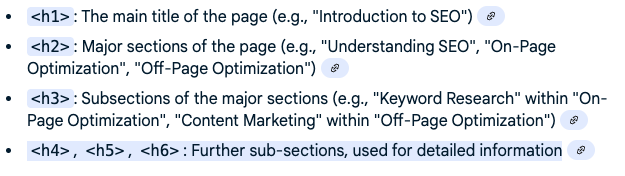 Example of proper heading hierarchy
Keyword Usage
Section titled “Keyword Usage”- Include Relevant Keywords
- Place important keywords in headings, especially H1 and H2
- Include keywords naturally in the first paragraph
- Distribute keywords throughout the content
- Avoid Keyword Stuffing
- Don’t force keywords where they don’t fit naturally
- Aim for 1-2% keyword density (1-2 uses per 100 words)
- Focus on readability first, keywords second
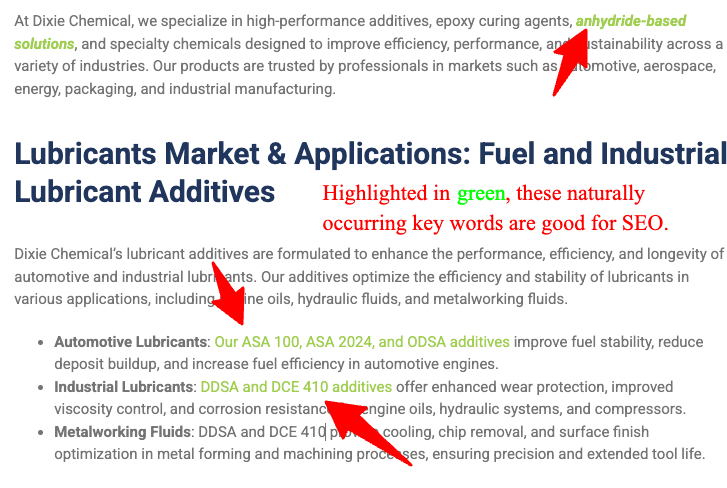
Example of natural keyword placement
Image Optimization
Section titled “Image Optimization”- Always Add Alt Text
- Describe the image content clearly
- Include relevant keywords when appropriate
- Keep alt text under 125 characters
- Use Descriptive File Names
- Rename images before uploading (e.g., “dixie-chemical-product-line.jpg” instead of “IMG_12345.jpg”)
- Use hyphens between words in file names
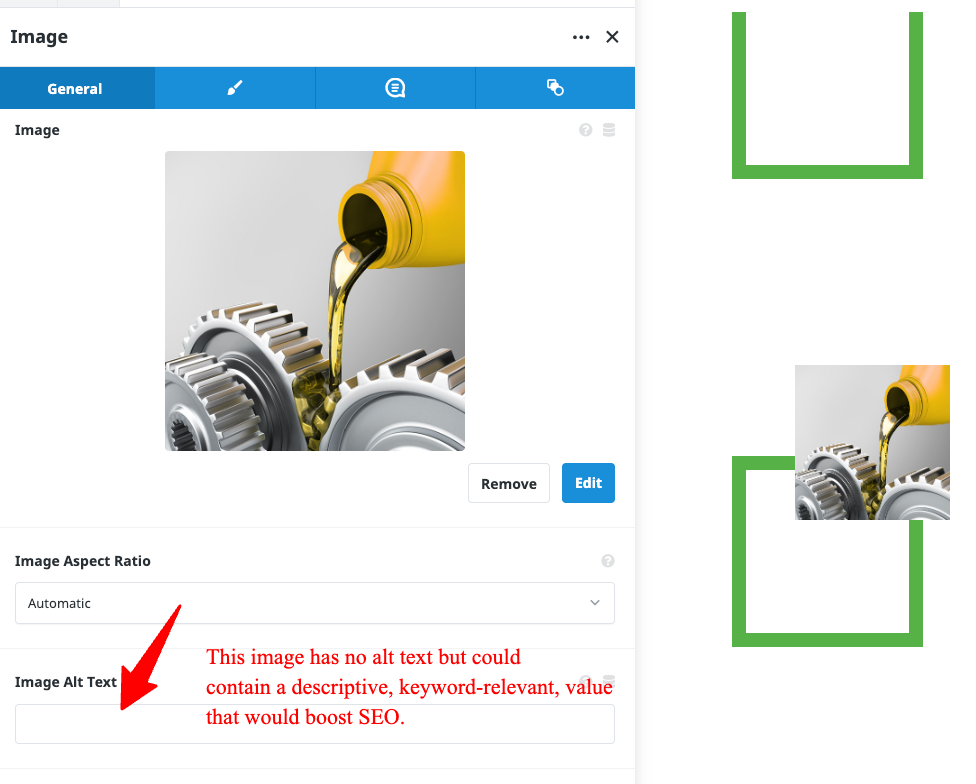
Example of adding descriptive alt text
Internal Linking
Section titled “Internal Linking”- Link to Other Relevant Pages
- Connect related content within your website
- Use descriptive anchor text (not “click here”)
- Ensure links are working properly
- Update Old Content
- Add links to newer content for features
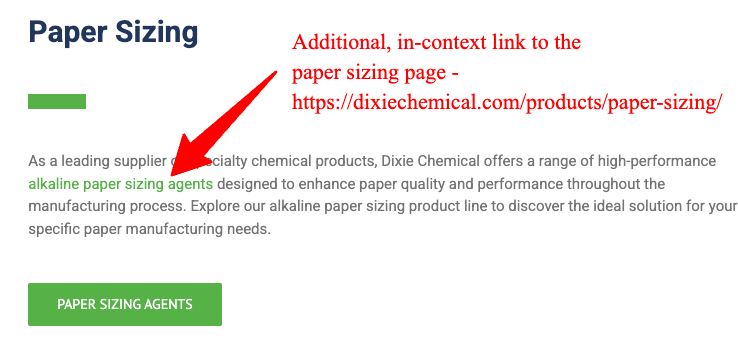
Example of clear, concise writing
Formatting for Scannability
Section titled “Formatting for Scannability”- Use Visual Hierarchy
- Bold important points
- Use italics sparingly for emphasis
- Create white space between sections
- Utilize Lists
- Numbered lists for sequential steps
- Bulleted lists for non-sequential items
- Keep list items parallel in structure
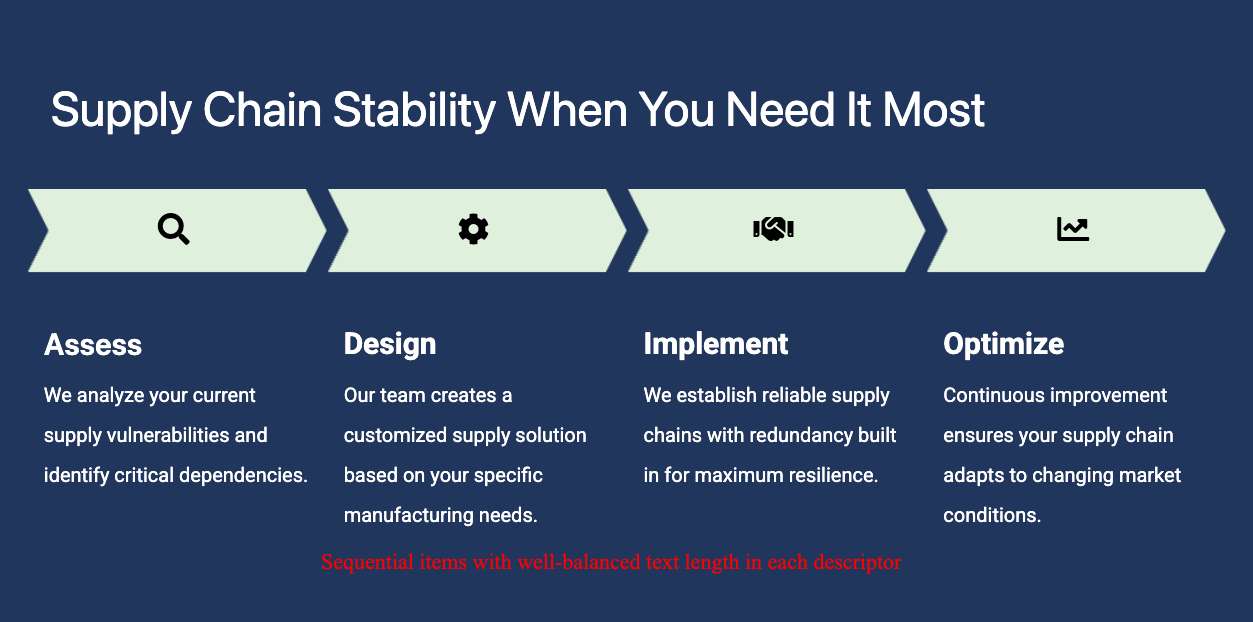
Example of scannable formatting
Specific Guidelines for Dixie Chemical Websites
Section titled “Specific Guidelines for Dixie Chemical Websites”Industry-Specific SEO
Section titled “Industry-Specific SEO”- Include Industry Terms
- Use proper chemical names and industry terminology
- Include common abbreviations alongside full terms
- Consider what terms customers might search for
- Product Pages
- Include specific product names in page titles and headings
- List key applications and benefits
- Use structured data when appropriate
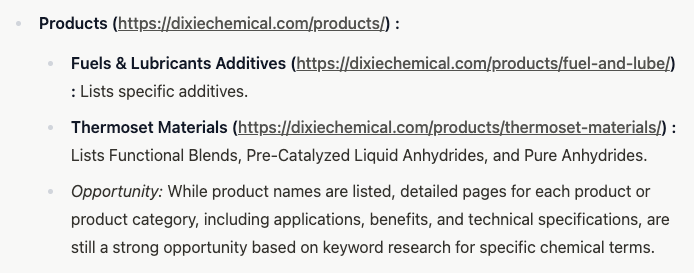
Example of industry-specific SEO
Content Recommendations
Section titled “Content Recommendations”- Product Descriptions
- Start with a clear overview of what the product is
- List key benefits before detailed specifications
- Include application examples and use cases
- Company Information
- Keep “About” content current and accurate
- Highlight company achievements and milestones
- Include location information for local SEO
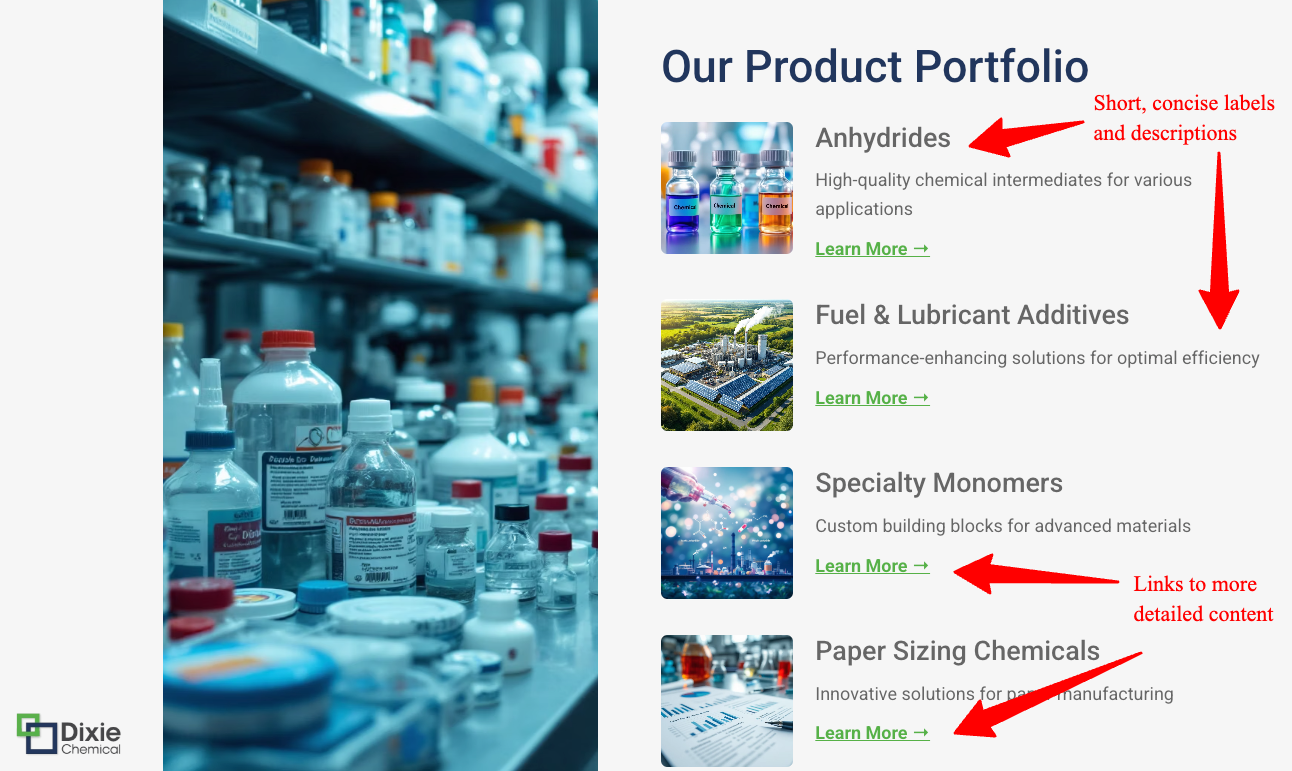
Example of effective content structure
Mobile Optimization
Section titled “Mobile Optimization”- Consider Mobile Readers
- Preview content on mobile devices
- Use shorter paragraphs for mobile screens
- Ensure buttons and links are large enough to tap
- Image Sizing
- Check that images resize appropriately on small screens
- Avoid wide tables that require horizontal scrolling

Example of mobile-optimized content
Quick Reference Checklist
Section titled “Quick Reference Checklist”Before Publishing Content
Section titled “Before Publishing Content”- Proper heading structure used (H1, H2, H3, etc.)
- Relevant keywords included naturally
- Paragraphs are short and scannable
- Images have descriptive alt text
- Content is organized with a clear structure
- Links use descriptive anchor text
- Technical terms are explained when necessary
- Content previewed on both desktop and mobile
- Spelling and grammar checked
- Content aligns with company messaging and brand voice
After Publishing
Section titled “After Publishing”- Test all links to ensure they work
- Check how the page appears on the live site
- Verify mobile appearance
- Consider sharing new content on social media or newsletters
- Plan for content updates as needed
Next Steps: Now that you understand SEO and web writing best practices, proceed to the Contact Form Overview to learn about the form functionality on the websites.